Nature
Trees have always intrigued me, from my earliest tree-climbing days to the present. I grew up in Southwestern Ontario, on a farm adjoining the sluggish Thames River. The river's edge was teeming with life, all of it adorned with a necklace of native trees like Black Willow and Sycamore. This tangle of wildlife was a magnet for this solitary child and her dog, providing everything needed to stir my imagination.
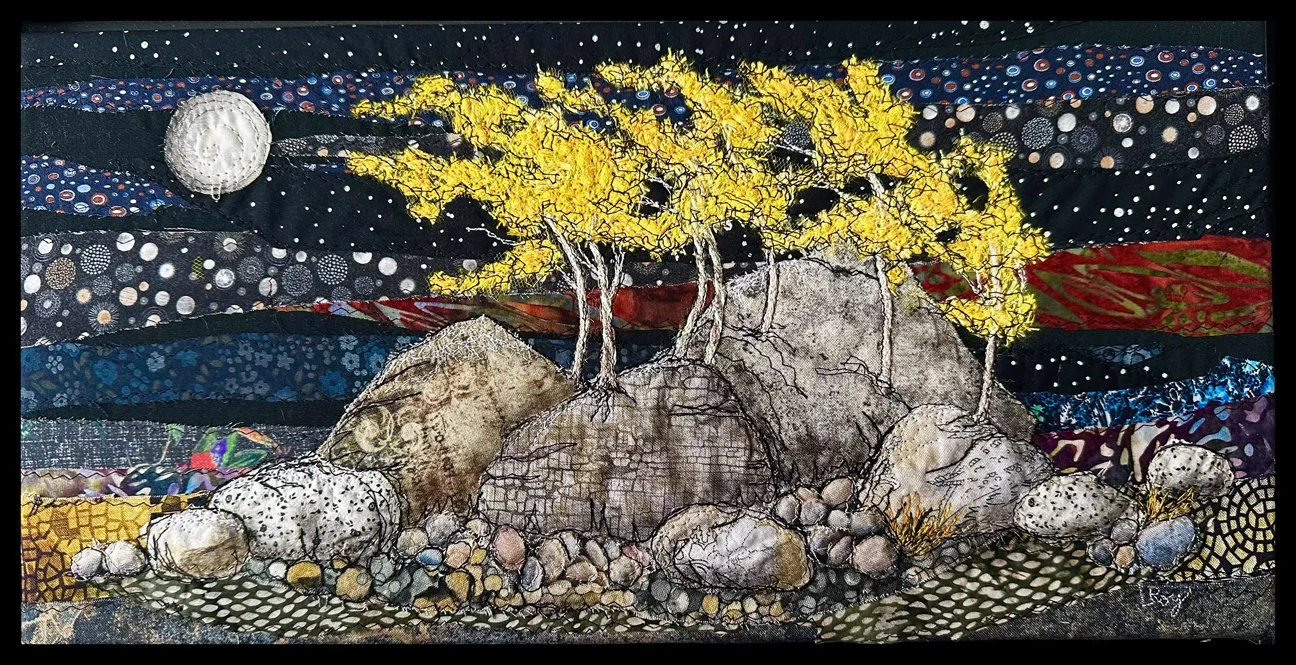
8×16” (includes black wood frame, 10×18”)
Wilderness areas of Ontario are filled with stony outcroppings that host intrepid native trees like the Paper Birch. Their golden foliage in the fall contrasts gloriously with a clear starry sky.
SOLD
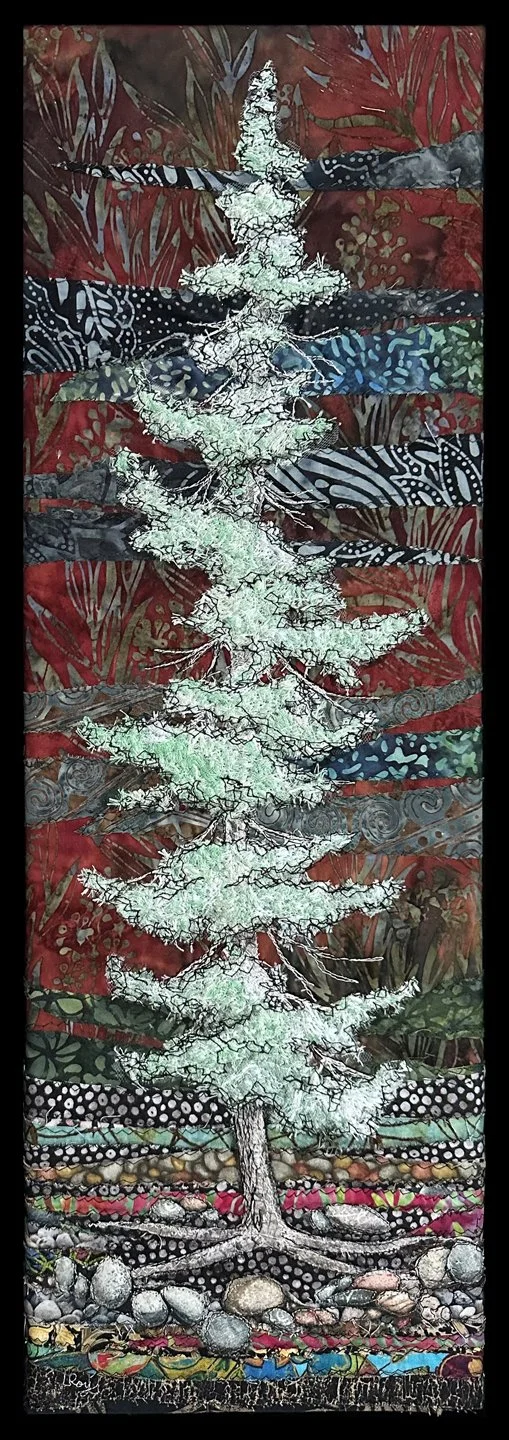
24×8” (includes black wood frame, 26×10”)
SOLD
A lone conifer rises from the stones.
The rich background is composed of layers of jewel-toned Batik fabrics.
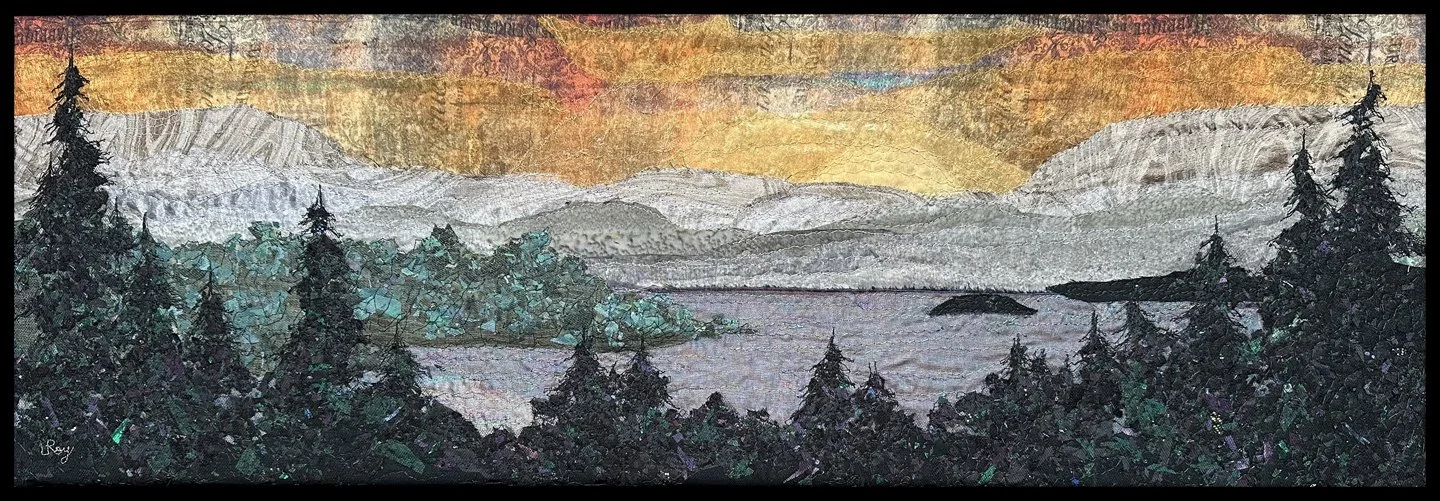
10×30” (includes black wood frame, 12×32”)
SOLD
Dreaming of the cool West Coast mountains. The sheer fabrics in this piece make it a challenge to photograph: the water changes colour depending on the angle, from blue to reddish blue.
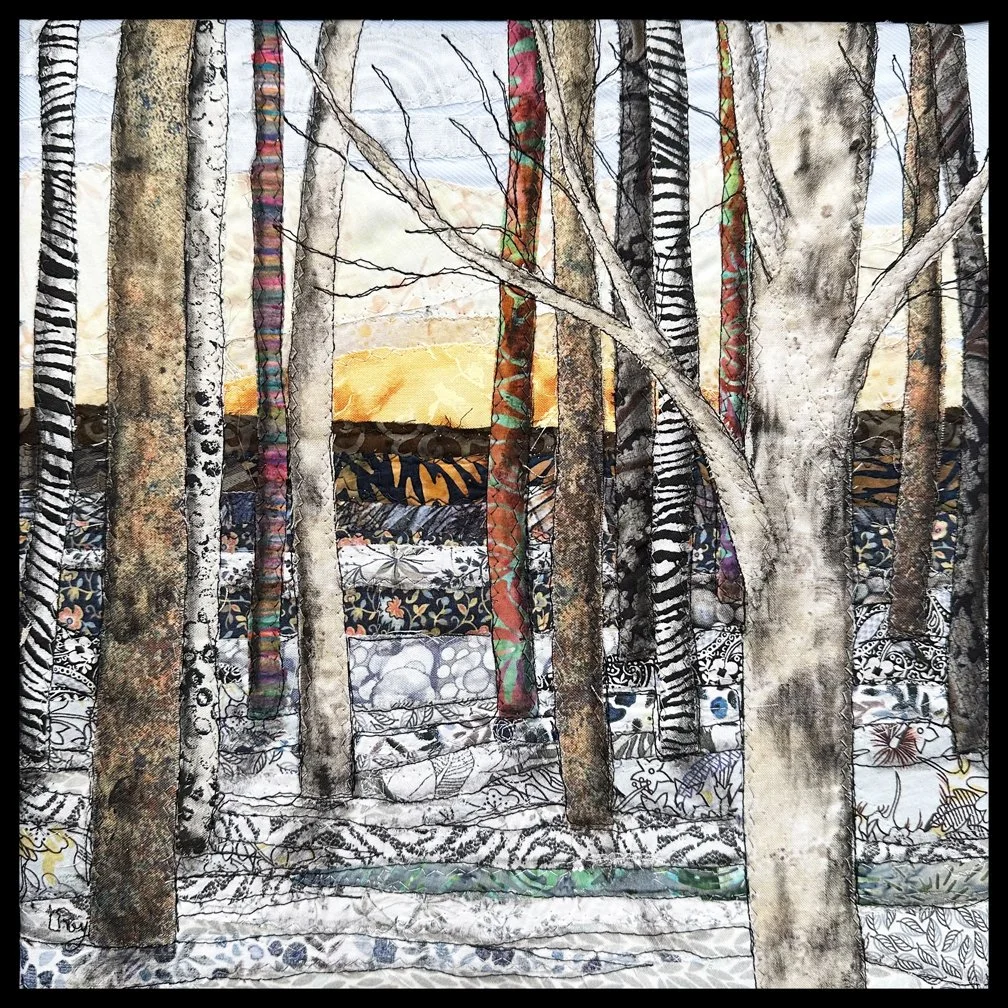

9×12” (includes black wood frame, 12×14”)
SOLD
Georgian Bay, Ontario offers spectacular sunsets all year long. The use of sheer fabrics in this piece give it a glow that changes with the angle and light.

60×25” fabric wall hanging
This piece was commissioned to “provide a better view”, fitting atop a bedroom window frame.

16×8” framed textile (includes black wood frame, 18×10”) SOLD
Persistence, resistance. We can find nourishment even in the most challenging environment if we support each other.

20x44" quilted wall hanging (diptych)
It may be difficult, and it may take time and energy, but there is always a way through.
SOLD
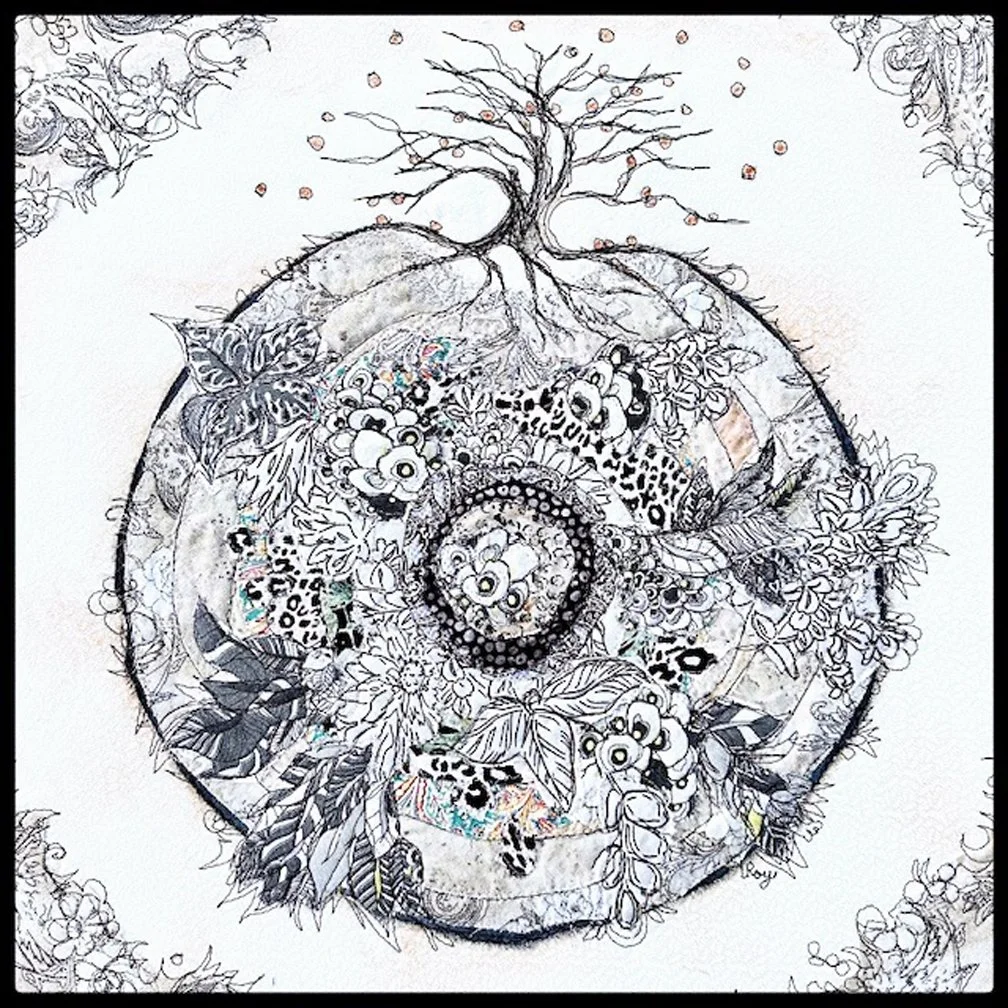
16x16" (includes black wood frame, 18x18")
SOLD
A tree in winter trusts in spring and in the generosity of the earth.
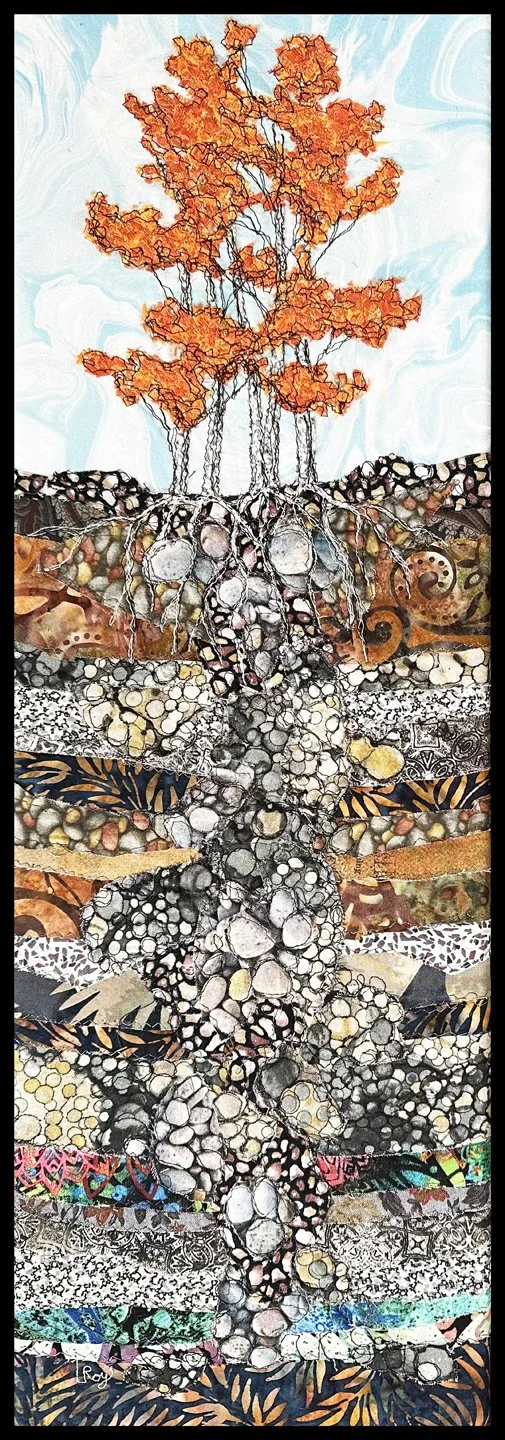

12×16” framed textile (includes black wood frame, 14×18”)
Modelled after the distinctive rock/white pine formations in Georgian Bay, Ontario, sculpted by wind and waves.
SOLD

17×32” fabric wall hanging
This iconic West Coast native tree is distinctive for its thin multi coloured bark and twisted branches that can be spotted from a great distance. It’s resistant to salt water, thus able to thrive on the rocky shores of the Pacific Ocean.
This piece was a commission.


2021 Commissioned piece
36x48" framed textile - Commissioned piece
Did you know our own Niagara Escarpment is home to the oldest recorded trees in Canada? This crucial information was obtained by daring acts of courage, to collect core samples from white cedars perched at the edge of the escarpment face.
These ancient cedars, many being more than 800 years old, are living journals, recording within their yearly inner rings various natural events that occurred within their impressive lifetimes. In this piece, the rings can be seen as scriptures etched on the escarpment face.
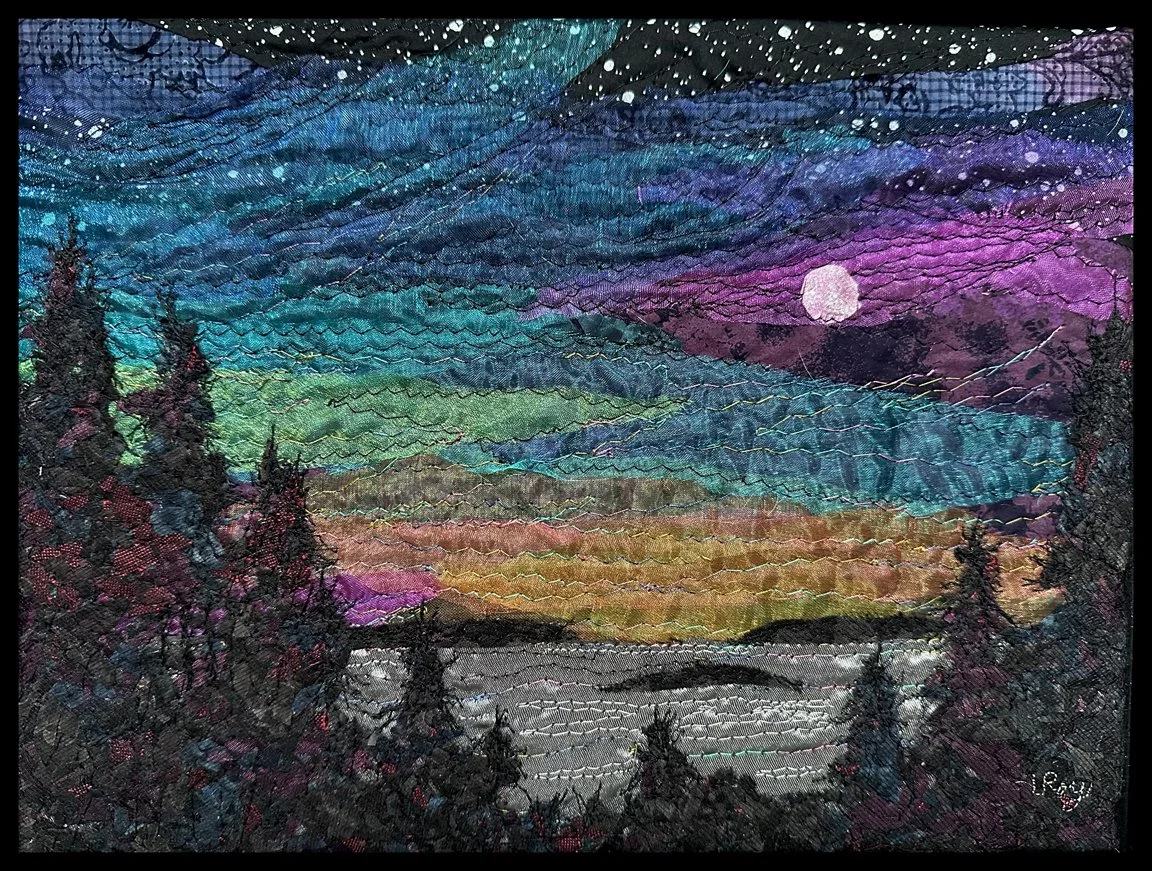
I made this piece as a test for a larger commission, from photos of Northern lights taken from Vancouver Island. It had been a long time since I’d worked with sheer fabrics, and I enjoyed every minute of it!
9×12”. SOLD

47×25” fabric wall hanging
A native fish of the Great Lakes in Ontario. This piece was a commission for a couple who live by Lake Ontario and love to go fishing!

30x30" framed textile SOLD
A Gathering of Trees
by Jennifer Lynn Dunlop
I survey you, my audience
a gathering of trees
rows of umber, tawny sentinels
welcoming, waiting
I have no answers
Trees do not loathe
but neither do they love
prevailing stately and silent
We attempt communication
awkward, ill-timed overtures
but when you touch me
it calms this strident tumult
assuages
my skin’s longing
your delicious pressure
expansive bliss
Trees leave such stumbling gestures to us
love, the great experiment
a human failure
but also,
the sweetest meaning
the confused
joy

12x12" (includes black wood frame, 14x14")
SOLD
This relative of the aphid may be one of the craftiest at evading discovery: its nymph hides behind its own manufactured mass of whitish bubbles, where it safely sucks on a plant’s zylem juices as it grows to adulthood. Living alone or in small colonies, this insect is relatively benign in the garden and can be safely admired or ignored. As a child I would gently scrape away a bubble fortress to reveal the tiny nymphs, watching them scramble to escape. The adult form, best known as a Froghopper, also feeds on the sap of plants.
There are over a dozen species of Spittlebug in Canada. Some are specific to particular plants like spruce, dogwood and even sunflowers. Portrayed here is the Meadow spittlebug (Philaenus spumarius), who likes all kinds of plants, including the French tarragon in my garden.

12×12” framed textile (includes black wood frame, 14×14”)
SOLD
I found this beautiful beetle and several others in my garden, on my newly added Swamp Milkweed. Distantly related to the Ladybug, this handsome little guy spends most of its life on specific species of milkweed, only leaving to pupate underground. I was especially attracted by the patterns on the wings - just a little bit different for each individual.

12x12" (includes black wood frame, 14x14")
SOLD
This tiny non-stinging wasp, of the Cynipidae family, is only ¼” long, and spends her life in tree canopies. Her nesting habit is the cause of those round protruding galls found on many kinds of plant leaves and stems, including Oaks. The galls arise from the larvae, which secrete a hormone that stimulates the production of cells. They can then burrow and feed from the newly created mass of nutrients. There are all kinds of galls, in different sizes and textures, each unique to a particular species of wasp. To some humans, these galls are unsightly and worrisome, but in reality, they are relatively harmless to the plant.
Fun fact about these galls: since they are rich in tannins, they have been harvested to make black and blue dyes and inks. To highlight this feature, I've added a quote from Wikipedia: "The earliest recipes for oak gall ink come from Pliny the Elder and are vague at best".
In this piece I’ve opened up one such gall (centre) so you can see the spongy interior and the tiny larva curled in the middle.

12x12" (includes black wood frame, 14x14")
SOLD
This handsome iridescent beetle is a ground dweller in forests and fields, often seen scooting across sunny trails. Around ½ inch long, the adults are active predators of insects, chasing down their prey with their long legs. Their larvae are ambush predators, lunging at prey from burrows in the soil. I remember watching these burrows as a child – dropping ants into the snapping jaws of the larvae!

12x12" framed textile SOLD
In flight... heading for the next flower..... air and sun shifting all around....
Native bees and bumblebees need all our support. They work harder, longer hours than imported honeybees, and they begin the gathering season earlier and later into the fall. They harvest pollen in harsher weather conditions. They are also important pollinators for the more challenging legume flowers like alfalfa. Over 400 species of native bees call Ontario their home.
On our property in Dundas, we've been planting more native shrubs and flowers, and we have stopped using all chemicals and fertilizers. Watching them work the flowers has become my favourite summer pastime!

16x16" framed textile SOLD
"When a tree is cut down and reveals its naked death-wound to the sun, one can read its whole history in the luminous, inscribed disk of its trunk: in the rings of its years, its scars, all the struggle, all the suffering, all the sickness, all the happiness and prosperity stand truly written, the narrow years and the luxurious years, the attacks withstood, the storms endured."
Herman Hesse

24x36" framed textile
I made this piece to celebrate this beautiful, impressive, 500-year old Heritage Maple that stands in Pelham, Ontario. This tree will have stories to tell, which is why I added a doorway.
More information about its history HERE.

36×29” wall hanging from my 2002-4 touring exhibition, Saving Paradise.
Eastern Flowering Dogwood - Cornus florida
It is impossible not to adore this beautiful large Carolinian shrub, from spring to fall a pleasure to behold. As a landscape plant is is well loved by gardeners, but its susceptibility to a debilitaing blight is making it a rare sight even in natural settings.
Although it is best known for its glorious white spring blossoms, I chose autumn for this piece. Its intense blood red foliage and fruit are show stoppers. Indigenous tribes made a decoction from stems and roots to use as a heart medicine, hence the heart beneath the surface.
9×12” (includes black wood frame, 11×14”)
SOLD
Trees and islands in Georgian Bay and the North Channel are sculpted by the action of winds and waves.